变形计
Warhammer 40,000 tie-in draws young donors, shows power of pop culture in public welfare_我的网站

一 |
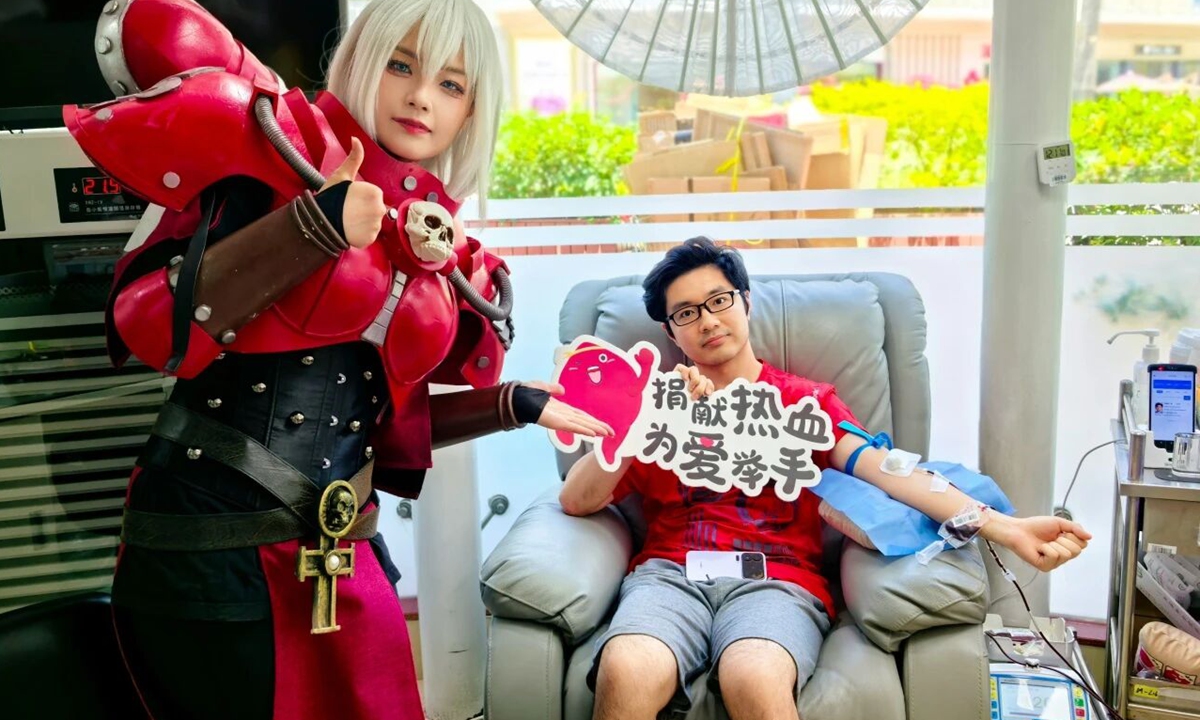
A blood donor poses together with a cosplayer dressed as a Sister of Battle from Warhammer 40,000. Photo: Official account of the Shanghai Blood CenterFor a few hours, the Shanghai Blood Center looked more like a fan convention than a medical facility.
Cosplayers in brightly colored power armor, carrying replica weapons, posed in front of displays featuring quotations and insignia from Warhammer 40,000, which is regarded as one of the world's best-known miniature wargames. Fans gathered around them for photos, creating the atmosphere of a franchise meet-up.
But the visitors had not come simply to meet fellow enthusiasts. Many had traveled from across China to roll up their sleeves and donate blood, drawn by the chance to take home a Warhammer-themed model.
The unlikely crossover reflects a broader effort by Chinese blood centers and public welfare organizations to reach young people in a language they recognize. By collaborating with popular international and domestic franchises, these organizations are making traditionally solemn causes more accessible - and, in this case, turning online enthusiasm into first-time blood donations.
Toys for lifeFrom July 24 to August 2, the Shanghai Blood Center held a campaign allowing people who donated whole blood at designated sites to enter a prize draw for Warhammer 40,000-themed figures and models.
The prizes ranged from giant 1:18-scale Knight Titans - towering war machines in the franchise's fictional universe - and Primarchs, its superhuman military leaders, to standard Space Marine figures.
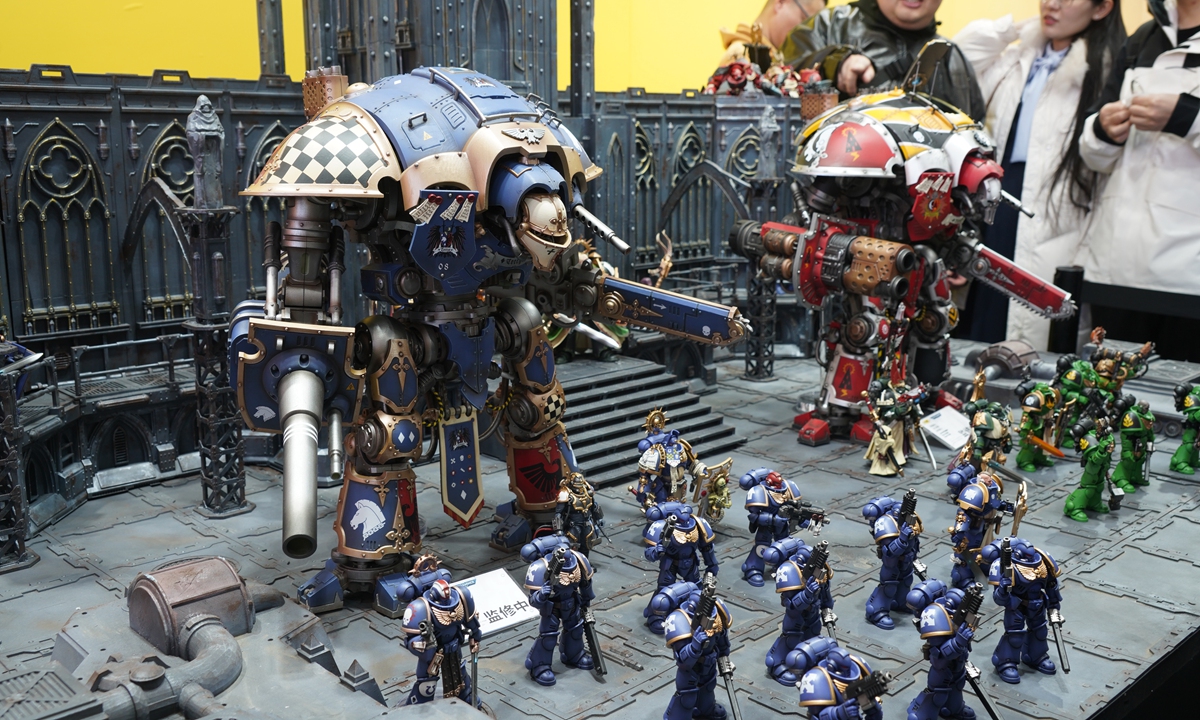
A Warhammer 40,000-themed model display at the Wonder Festival 2023 Beijing File photo: VCGThe crossover quickly became a topic of discussion online. According to the center, posts related to the campaign drew millions of views on Chinese social media platforms Weibo and Xiaohongshu (rednote) within three days, alongside a surge in user-generated posts and shares.
At three designated blood donation sites, the combined number of donors reached 256 in a single day, said the center.
The response was particularly notable because Shanghai had experienced consecutive days of high temperatures, which reduced pedestrian traffic and affected street-based blood collection.
With some models distributed faster than expected, the center held another round of the campaign on August 8 and 9.
The campaign appears to have reached the audience it was designed to attract. Zhu, 25, who donated blood in Shanghai on August 1, told the Global Times that his interest in Warhammer was the main reason he joined the campaign.
"I had never donated blood before taking part in this event," Zhu said.
Zhu lives outside Shanghai, as did many participants he met at the site. Some had traveled from the neighboring provinces, while others came from even farther away, largely because of the Warhammer models.
"Close to half of the donors on site that day were giving blood for the first time, and they were also Warhammer fans," Zhu said.
The campaign was neither an isolated experiment nor the center's first attempt to use pop culture to engage potential donors. According to the Xinhua News Agency, the Shanghai Blood Center began exploring IP collaborations in 2014 and has more than a decade of experience in such campaigns.
Pop culture for public goodChina's voluntary blood donation rate has reached 11.4 donors per 1,000 people, Gao Guangming, deputy head of the Department of Medical Emergency Response under the National Health Commission, said at a press conference in June 2025.
"Over the past two years, voluntary blood donations have declined globally due to multiple factors. In China, the accelerating aging of the population, changes in lifestyles, and overlapping challenges in publicity, organization and mobilization have left the imbalance between blood supply and demand relatively pronounced," Gao said.
"Clinical demand continues to rise, while seasonal, regional and blood-type-specific shortages persist," Gao said.
As people aged 35 and under constitute the majority of blood donors, attracting more young people is crucial to sustaining voluntary blood donation.
"Using designer toys and popular products can make blood donation more approachable, increase its visibility and recognition among young people, and help remove psychological barriers," Zhang Yiwu, a professor at Peking University with an expertise in cultural studies, told the Global Times on Wednesday.
Young people are highly active on social media and more willing to share their experiences, meaning their participation can encourage others to follow, Zhang said. Attracting younger generations is therefore essential to the long-term development of public welfare causes, he noted.
Blood donation is not the only field in which Chinese organizations are using popular franchises to broaden public participation.
In March, One Foundation again collaborated with Twinkle Twinkle, a popular character owned by Chinese toy company Pop Mart, to raise awareness of the needs of people requiring special support. Volunteers and children with autism took part in an art activity at Pop Mart City Park in Beijing.
The Pokémon franchise also appeared in a ByteDance public welfare campaign in 2025, which called for greater attention to the treatment and rehabilitation of children with cleft lips and palates, according to Chinese media reports.
Yet the campaign's success also raises a longer-term question: whether enthusiasm generated by prizes can be converted into regular voluntary donations.
"If there are more Warhammer-related charity campaigns in the future, fans will continue to follow them with enthusiasm, and I would also consider participating again," Zhu said. "However, without rewards or other incentives, the actual participation rate may not be very high."
A Shanghai Blood Center staff member acknowledged the same challenge. "A themed event can quickly increase the number of blood donors, but the long-term security of a city's blood supply ultimately depends on a stable community of voluntary donors," said the staff member, according to Xinhua.
The lasting value of an IP collaboration, therefore, lies not simply in the immediate increase in donor numbers, but in whether it gives first-time donors a positive reason to return.
"The real significance of IP collaborations is to give young people an opportunity to walk into a blood donation site," Xinhua noted. "Through standardized services and a positive experience, they can develop an understanding of and identification with voluntary blood donation, ultimately moving from 'one-time campaign participants' to 'long-term contributors to public welfare.'"
。 近日,网红灌饼摊主“粥饼伦”宣布关闭天津首家店铺,原因是店铺年租金从13万元。经营两年、已积累不少老顾客的门店,因为续租成本突然上升而不得不告别。值得注意的是,这并非他第一次因为租金压力关店,此前石家庄分店也曾因为月租2万元而停业。编辑观点:房东调整租金本身是正常的市场行为,但如果一间店铺靠着自己的努力形成稳定客流,但房东却令租金随着品牌名气上涨,最终把经营者的利润空间吃掉,那么这涨租究竟是不是“眼红”商贩多少有些令人怀疑。

二 | 从房东的角度看,涨租未必就意味着“眼红人家生意”。商铺本身也是一种商品,周边商业环境、客流变化、物业成本以及市场租金水平发生变化,房东自然有重新议价的权利。物业方希望重新评估租金,其实也是正常的商业逻辑。粥饼伦自己也表示,“人家涨房租想挣钱,也没毛病”,但真正让人无法接受的,是涨幅超过了自己的经营承受能力。无独有偶,类似的情况也发生在胖东来身上。

三 | 胖东来生活广场虽然年利润超过1亿元,但由于租约问题导致部分租金被抬到明显偏离公平水平,于东来最终仍决定在租约到期后关闭这家经营了24年的老店。 说到底,做生意本来就是房东和商户互相成就的关系。房租上涨和商户能不能继续赚钱,也是一场双方都要承担风险的博弈。房东不应将店家辛苦经营以及本身名人效应而吸引来的客流视作自己的资源。否则最终商家跑路,店铺长期空置,落得个两败俱伤的结局。 你觉得“粥饼伦”这次闭店,更多是房东正常调整租金,还是品牌走红后遭遇了“名气税”?如果是你经营一家生意不错的店,你会接受大幅涨租继续干,还是宁愿换个地方重新开始?。
Current article:http://lindunfokangliucishirun.shop/rli/20260826/4750168.html
Published on:20:17:19